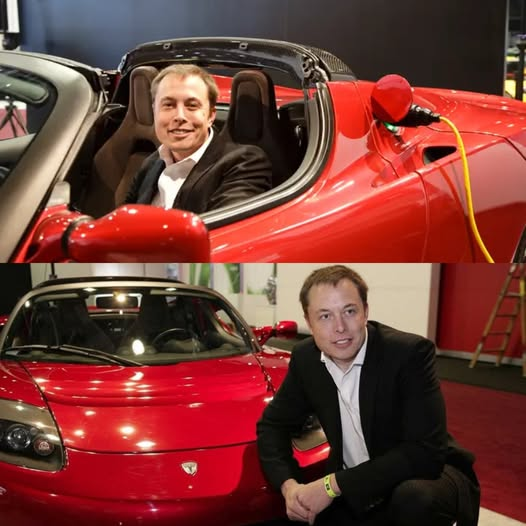
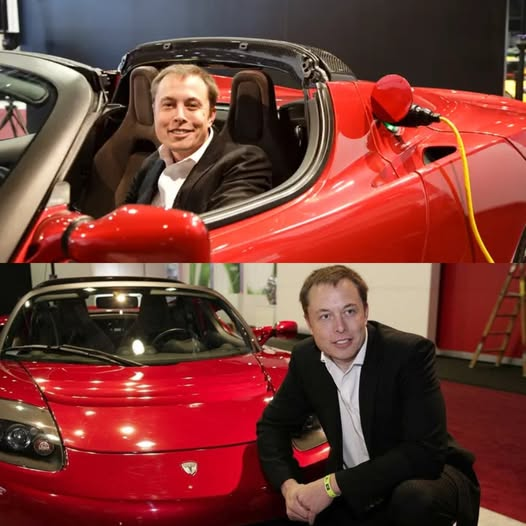
In the mid-2000s, when most of the automotive industry viewed electric vehicles as slow and impractical, Elon Musk had a different idea. Electric cars, he believed, could be more than just fuel-efficient sedans or small city cars. They could also be powerful, sleek sports cars that brought the thrill of driving to the eco-conscious. Musk’s vision was to marry the performance of a high-end sports car with the eco-friendly benefits of electric propulsion.
Thus, the Tesla Roadster was born. Introduced in 2008, the Roadster wasn’t just any electric car it was a game-changer. The car, based on the Lotus Elise chassis, boasted an all-electric range of 245 miles per charge, a groundbreaking feat at the time. But what really set the Roadster apart was its performance: it could accelerate from 0 to 60 mph in under 4 seconds, rivaling many gasoline-powered sports cars in speed and performance. It wasn’t just a novelty for green enthusiasts; it was a performance car that could go toe-to-toe with the best of them.
The Roadster served as proof of concept demonstrating that electric propulsion didn’t mean sacrificing performance. While the car was limited to a niche market due to its high price tag (around $109,000), it captured the attention of the automotive world and established Tesla as a serious player in the car industry.
From Sports Car to Mass Market
Though the Roadster was a landmark achievement for Tesla, Musk’s vision was always bigger than just a high-performance electric vehicle. He aimed for something more mainstream to create electric cars that would appeal to the masses, not just sports car enthusiasts or tech-savvy early adopters. In the years following the Roadster’s success, Tesla shifted its focus from niche sports cars to vehicles that could compete in the mass market.
The launch of the Model S in 2012 marked a pivotal moment in Tesla’s evolution. With the Model S, Musk and his team took the Roadster’s core principles performance, luxury, and sustainability and applied them to a more affordable and family-friendly sedan. Tesla’s ambition grew exponentially as the company began to prove that electric vehicles could be viable for everyday drivers.