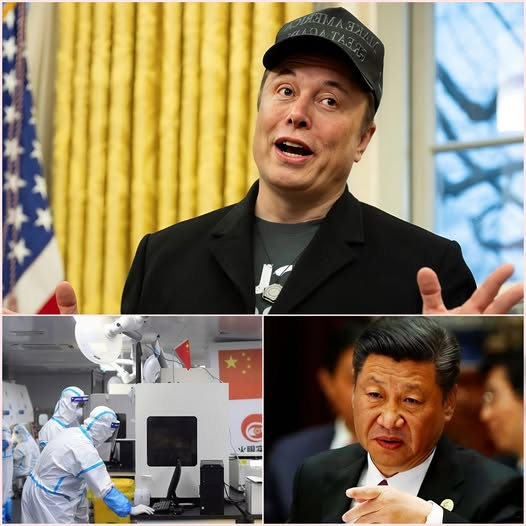
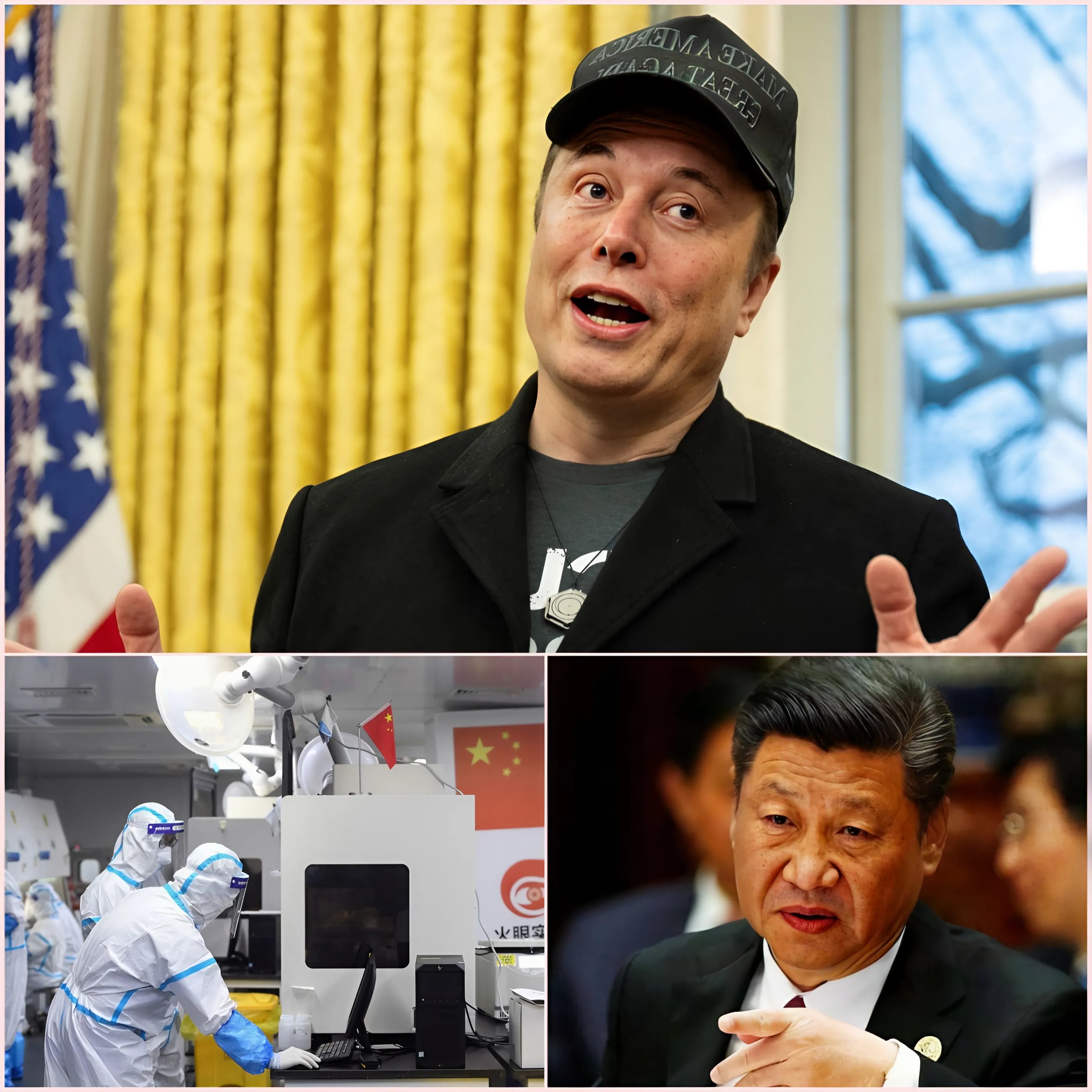
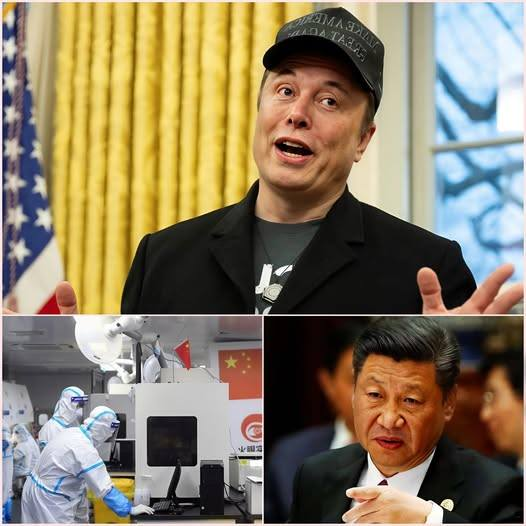
🔥Breaking news: The White House shocked with Elon Musk’s statement “The real origin of COVID-19 is from a Chinese laboratoryâ€. This is not the first time the White House has expressed its opinion on the origin of the nCoV epidemic leaked from a laboratory, even calling it the “Chinese virusâ€, causing Beijing to react strongly.
In a dramatic escalation of the ongoing debate over the origins of COVID-19, the White House has ignited global controversy by endorsing a statement attributed to Elon Musk, asserting that the pandemic stemmed from a laboratory leak in China. The claim, prominently featured on a newly launched White House website titled “Lab Leak: True Origins of COVID-19,†marks a bold departure from the cautious stance previously adopted by U.S. intelligence agencies and reignites tensions with Beijing, which has vehemently rejected such accusations. This is not the first time the White House has pointed to a lab leak as the source of the virus, nor is it the first instance of the administration referring to COVID-19 as the “Chinese virus,†a term that has drawn sharp criticism from China and sparked accusations of politicizing a global health crisis.
The White House’s latest move comes on the heels of a January 2025 CIA assessment, which concluded with “low confidence†that the virus likely originated from a lab in Wuhan, China, possibly the Wuhan Institute of Virology. This assessment, based on a reanalysis of existing intelligence rather than new evidence, aligns with earlier findings from the FBI and the Department of Energy, both of which have leaned toward the lab-leak hypothesis. However, the intelligence community remains divided, with several agencies still supporting the possibility of a natural origin, such as a spillover from animals at a Wuhan wet market. The White House’s decision to amplify Musk’s claim—a statement originally made in 2023 when he endorsed a tweet suggesting a lab leak—has drawn both praise and condemnation, reflecting the polarized nature of the debate.
Musk, the CEO of Tesla and SpaceX, has long been a polarizing figure in discussions about COVID-19. His 2023 comments, which prompted a warning from Chinese state media about endangering Tesla’s relationship with China, resurfaced as the White House sought to bolster its narrative. The new website, launched on April 18, 2025, goes further than most official reports, asserting that the virus “possesses a biological characteristic not found in nature†and that evidence for a natural origin has failed to materialize. These claims echo a 2024 report by the Republican-led House Select Subcommittee on the Coronavirus Pandemic, which concluded that the virus likely emerged from a laboratory accident. Critics, including many virologists, argue that such assertions lack definitive evidence and risk undermining scientific consensus.
China’s response has been swift and uncompromising. A spokesperson for the Chinese embassy in Washington dismissed the White House’s claims as “politically motivated†and lacking credibility, urging the U.S. to “stop scapegoating†Beijing. Chinese Foreign Ministry spokeswoman Mao Ning reiterated that tracing the virus’s origins is a scientific matter and accused the U.S. of weaponizing the issue to discredit China. Beijing has consistently maintained that the lab-leak theory is a baseless conspiracy, pointing to a 2021 joint investigation with the World Health Organization that deemed a lab origin “extremely unlikely.†However, the WHO has since clarified that all hypotheses remain open, and China’s refusal to cooperate further with international investigations has fueled speculation.
The White House’s embrace of the lab-leak narrative has significant geopolitical implications. By aligning with Musk’s provocative statement and framing the pandemic as a Chinese failure, the administration risks escalating tensions with Beijing at a time when U.S.-China relations are already strained. The decision to redirect the federal Covid.gov website to the new lab-leak page, replacing information on vaccines and testing, has also drawn criticism from scientists and public health experts. Dr. Angela Rasmussen, a virologist at the University of Saskatchewan, described the move as “misleading†and warned that it prioritizes political messaging over scientific rigor. Others, including Republican lawmakers like Senator Tom Cotton, have praised the administration for “arming the public with the truth†and called for measures to hold China accountable, such as imposing tariffs.
The controversy has also reignited domestic debates about the U.S. response to the pandemic. The White House website criticizes policies like lockdowns and mask mandates, aligning with narratives pushed by conservative figures during the crisis. It also accuses former NIH official Dr. Anthony Fauci of suppressing the lab-leak theory, a claim Fauci has denied, calling such accusations “distortions.†As the world continues to grapple with the pandemic’s legacy—over 7 million deaths and widespread economic disruption—the question of COVID-19’s origins remains unresolved. While the White House’s latest move may resonate with those who view the lab-leak theory as plausible, it risks deepening divisions and complicating efforts to prevent future pandemics. For now, the truth about the virus’s origins remains elusive, caught in a web of science, politics, and international rivalry.